

What USD/JPY Really Tells You About Rates, Risk and Intervention

Read Time: 5 minutes
On the surface it's just the US dollar against the Japanese yen. Watch it for a while, though, and USDJPY becomes a live tutorial in what actually moves currencies.
Some currency pairs reward a quick glance. USDJPY rewards attention. The longer you follow it, the more it reveals about the forces sitting underneath every FX chart – interest rate expectations, bond yields, the appetite for risk, carry trades and the ever-present chance of government intervention. That's what makes it worth understanding even for traders who never put a single order on the pair.
The reason it carries so much information comes down to the gap between the two economies behind it. On one side sits the US dollar, underpinned by the world's largest economy, the Federal Reserve and the deepest bond market anywhere. On the other sits the yen, which has spent decades as a go-to funding currency precisely because Japanese interest rates have stayed so low for so long.
- The rate gap that drives the trend
- The intervention wildcard
- The same pair, two stories
- Three lenses for reading the pair
- Why it's worth watching anyway
That contrast sets up a powerful dynamic. When US rates sit well above Japanese rates, an investor earns more simply by holding dollars instead of yen. That yield gap is one of the main reasons USDJPY can grind higher for long stretches. It's the engine behind what traders call the carry trade – funding a position in a low-yielding currency and parking the money in a higher-yielding one.
Put plainly: if the US pays you more to hold dollars than Japan pays you to hold yen, capital has a built-in reason to drift towards the dollar. It won't push the pair up every single day, but it does explain why USDJPY can stay firm even when the chart already looks stretched.
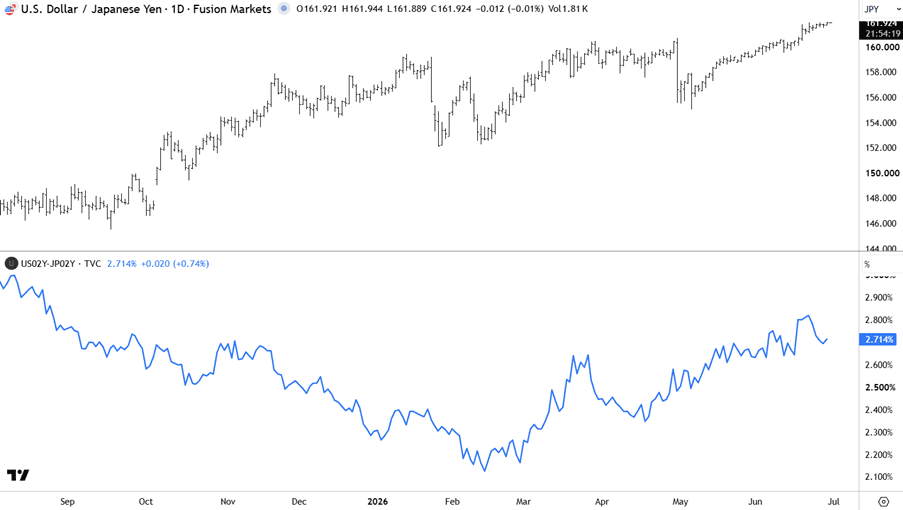
Chart 1 – USDJPY (top) vs US 2Y - JP 2Y spread (bottom)
This is exactly why leaning on price action alone can mislead you on USDJPY. Support levels, breakouts and moving averages all have their place, but the bigger driver is often hiding in the bond market. If US yields are climbing while Japanese yields stay pinned down, the pair can keep pressing higher even when momentum indicators scream overbought. Flip that – US yields easing, or the Bank of Japan turning more hawkish – and the move can unwind in a hurry.
Which brings us to the other defining feature of this pair: the risk that Japan steps in.
Tokyo generally doesn't want to see a disorderly collapse in the yen. A softer currency helps exporters, but it also makes everything imported more expensive – and for a country that brings in a huge share of its energy, a sliding yen feeds straight into the cost of living. That's why Japanese officials tend to get noticeably louder whenever USDJPY rises too fast or nears a historically sensitive level.
The awkward part for traders is that intervention is hard to time. Authorities might warn the market for days or even weeks before doing anything, and sometimes the talk alone is enough to cool things off. Other times traders keep buying until Japan actually moves in and starts buying yen – and when that happens, USDJPY can fall sharply in a very short space of time.
The lesson worth holding onto: intervention can flip the short-term direction without changing the underlying trend. If the rate gap is still wide, a yen-buying episode often produces a sharp pullback rather than a genuine reversal. Separating short-term event risk from the broader macro backdrop is half the battle.
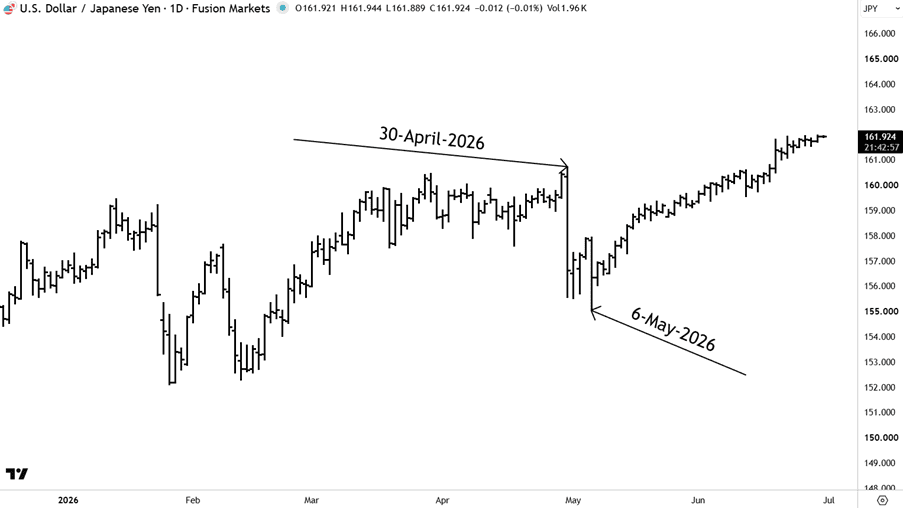
Chart 2 – USDJPY with recent interventions
USDJPY is also tightly bound to global risk sentiment, and this is where it gets genuinely interesting. In calm markets the yen tends to weaken as investors reach for yield and take on more risk. But when fear takes over, the yen can suddenly strengthen as carry trades are unwound – traders who funded positions in yen scramble to close them, and that buying props the currency up.
So, the yen can behave in opposite ways depending on what's actually driving the market. If the story is higher US rates, USDJPY usually rises. If the story is a global risk-off shock, USDJPY can fall as investors cut exposure and unwind leverage. One pair, two completely different narratives, depending on the catalyst.
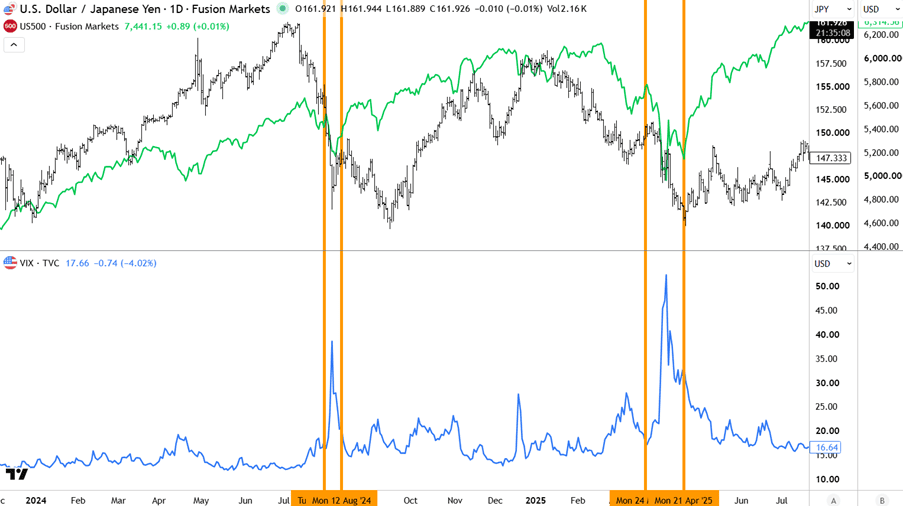
Chart 3 – USDJPY (bars) & US 500 CFD (green) vs VIX (blue). This chart clearly demonstrates that major spikes in the VIX tend to have an inverse correlation with USDJPY and US equities.
For traders, all of this boils down to a simple framework. Look at USDJPY through three lenses rather than one.
- Rate expectations. Look past the spot chart to US Treasury yields, Japanese government bond yields and central bank commentary. If the Fed is expected to stay tighter than the Bank of Japan, that usually supports the pair.
- The speed of the move. Japan worries far more about rapid, disorderly yen weakness than about a slow drift lower. A sharp spike higher in USDJPY raises the odds of verbal or actual intervention.
- Broader risk sentiment. When equity markets are calm and volatility is low, carry trades tend to survive. When volatility jumps, the yen can strengthen quickly as traders rush to reduce risk.
Ultimately, USDJPY isn't just another major FX pair. It's a real-time demonstration of how rates, policy, positioning and risk appetite all interact. It's a reminder that currencies aren't moved by economic data alone – they're shaped by the differences between economies, the expectations baked into central bank policy, and the way investors behave when they're under pressure.
That's what makes it so useful for newer traders in particular: it makes macro forces visible. When rate differentials widen, carry becomes more tempting. When officials start warning about intervention, policy risk climbs. When markets turn defensive, positioning can unwind fast. You can watch each of those forces play out on a single chart.
So even if you never trade the pair directly, keeping half an eye on it will sharpen how you read the wider FX market. It's a standing reminder that currencies aren't just lines on a screen – they're prices shaped by interest rates, capital flows, political pressure and human behaviour. And in that sense, the yen still matters. A lot.
We’ll never share your email with third-parties. Opt-out anytime.