

Preview: Canadian March CPI

Read Time: 2 minutes
This week’s March inflation data for Canada will be the market’s first look at how the recent volatility in energy prices is feeding into Canadian headline prices.
As is the case with most major economies, markets are expecting higher energy prices in March to pass through to headline inflation.
Forecasts call for headline CPI to jump from 1.8% to 2.5%, with the MM number expected to rise 1.0%.
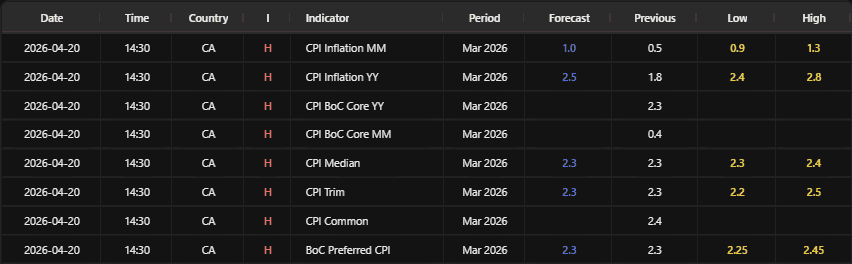
Gasoline, unsurprisingly, accounts for more than half of the expected month-on-month jump.
Even though WTI has fallen by close to 30% since its March high, prices are still 26% higher than before the conflict.
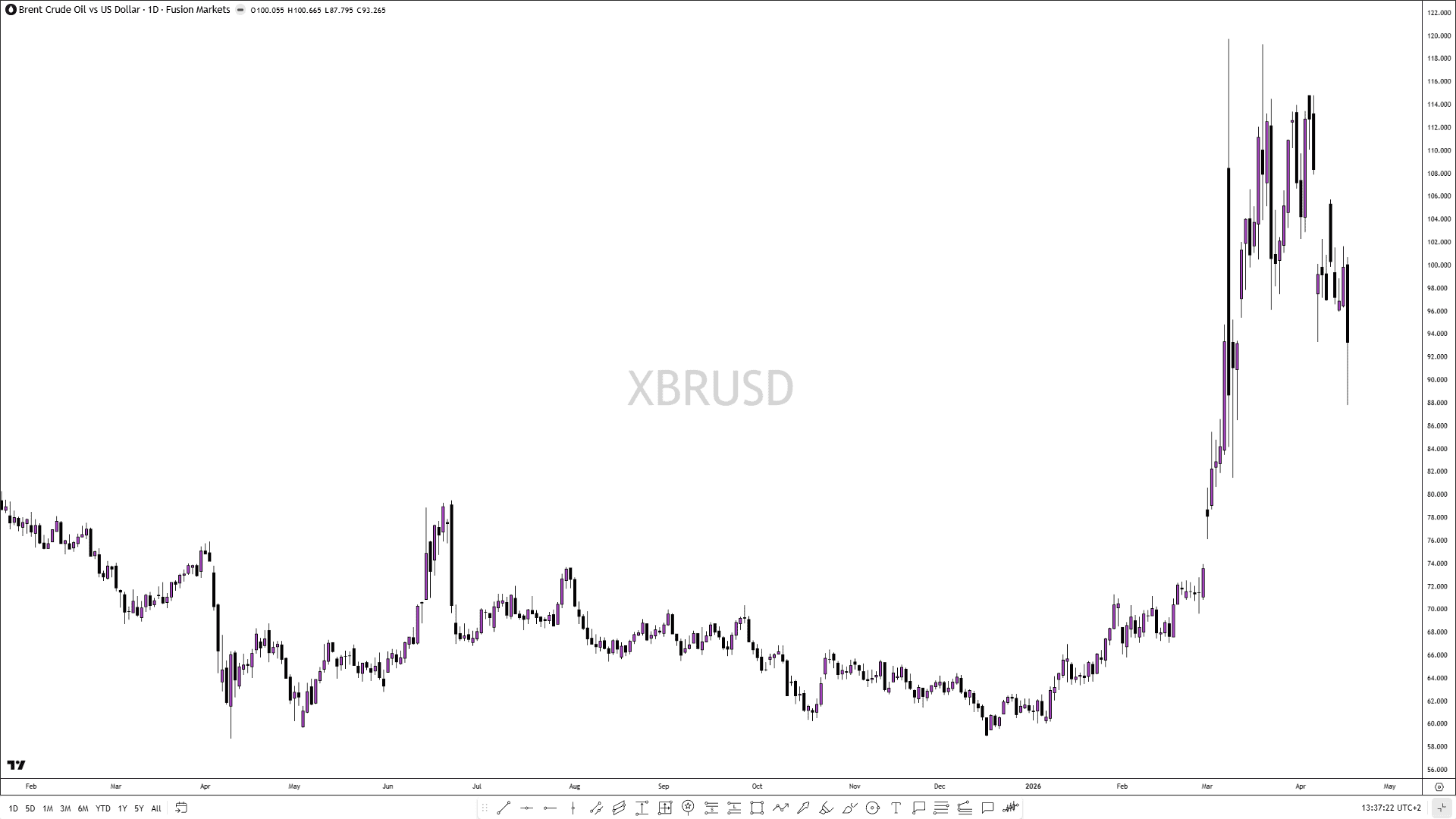
As a result, markets are still comfortably pricing in a Bank of Canada rate hike by year-end.
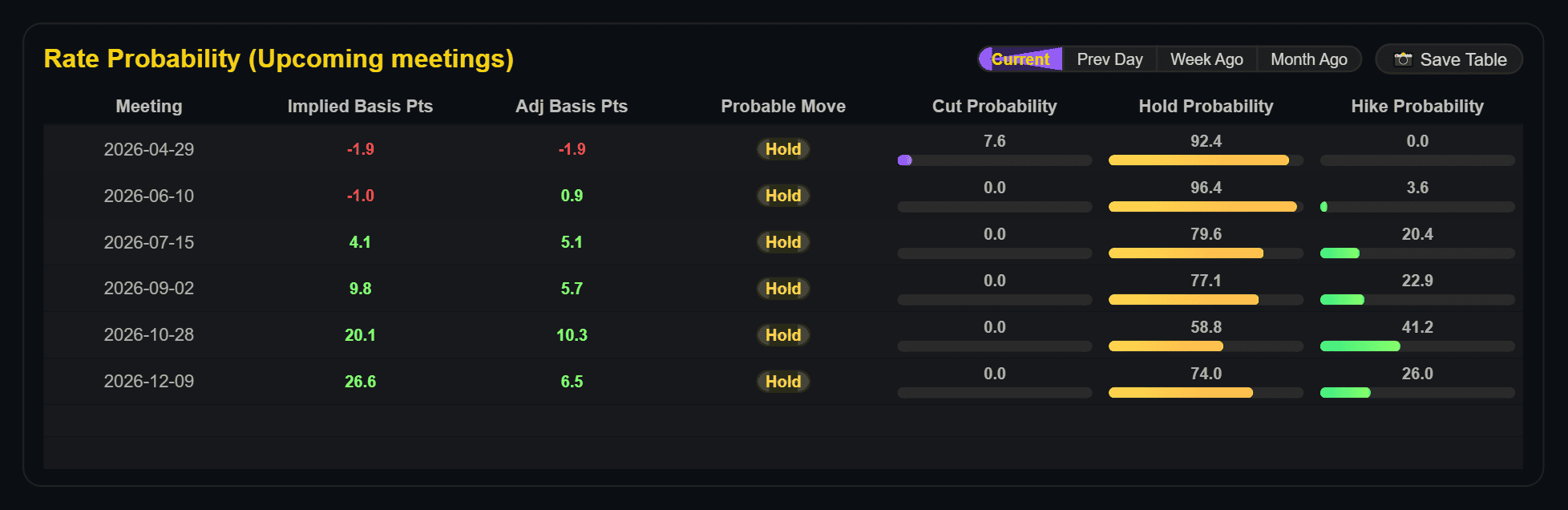
However, the bigger focus for the BoC (Bank of Canada) won’t be on the here and now.
It’s highly likely that central banks will be able to look through short-term shocks in headline inflation, as policy decisions usually stem from fluctuations in core prices.
Thus, for the BoC, their focus will be on whether prices stay high enough for long enough to push core inflation higher.
That seems unlikely at this stage unless oil prices revisit their recent highs.
It’s also important to remember that the BoC’s preferred measure of core inflation (the average of CPI-Median and CPI-Trim) has surprised to the downside for the last three prints in a row.

Thus, as long as Core inflation remains close to 2%, and given the lower growth numbers, the current pricing seems too hawkish.
Where does that leave things for the Canadian Dollar?
As markets should be able to discount higher CPI in the short term, numbers close to consensus shouldn’t matter too much for CAD.
However, with a hike fully priced in by year-end, CAD could face downside pressure should inflation print much lower than estimates, as it would force rate markets to rethink their hike expectations.
In the event of a big surprise miss in the CA CPI data, traders would likely keep a close eye on pairs like AUDCAD.
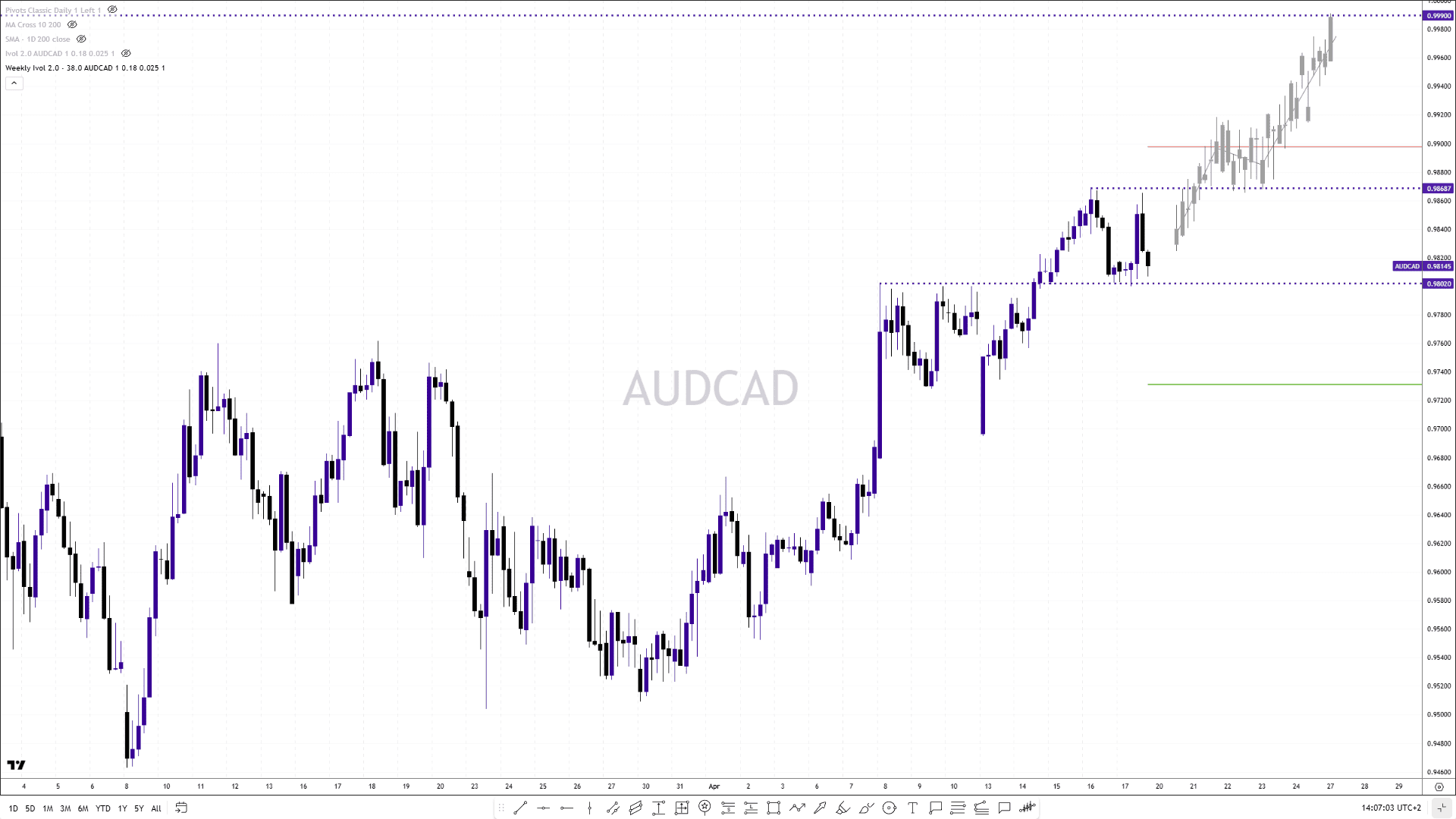
Compared to the BoC, the RBA has already hiked rates this year and is expected to follow through with another two hikes by year-end.
The policy divergence between the two banks has been a key driver for AUDCAD upside in recent months.
A big miss in CPI could prompt buyers to make another attempt at the recent highs around 0.9870.
Above that, the next major resistance for the pair is around 0.9990, which is the high from February 2021.
Another level worth keeping on the radar is the weekly implied volatility high, which sits close to the 0.9900 psychological price level.
Find out more about the Best Forex Brokers in Canada in 2026.
We’ll never share your email with third-parties. Opt-out anytime.
Relevant articles