

RBNZ Preview: Hawkish hold?

Read Time: 4-5 minutes
On Wednesday, the RBNZ steps up to the plate with their May rate decision. The base case is for the RBNZ to hold the OCR at 2.25%, but the bulk of the focus will fall on the Monetary Policy statement and the bank’s OCR projections.
For this week’s meeting, markets are pricing in a near 80% chance of a hold, with a small 20% premium for a hike.
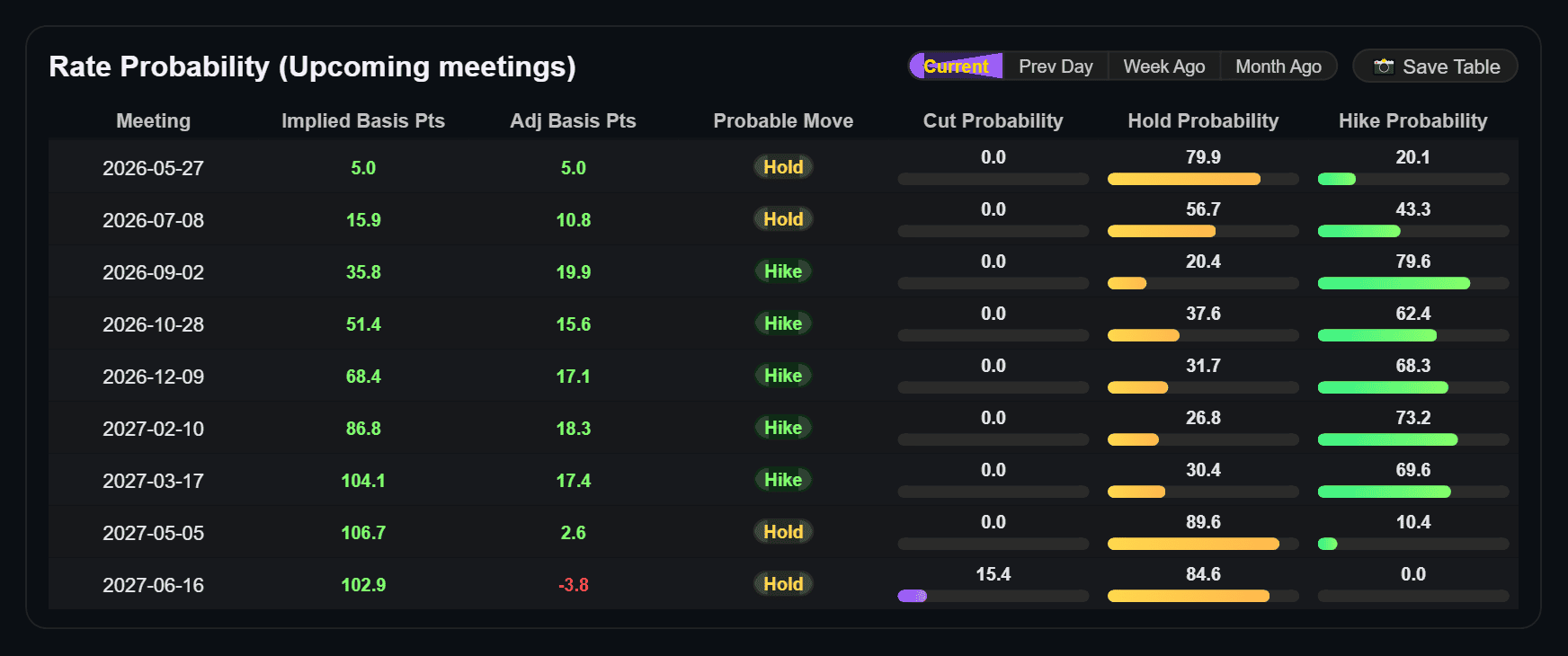
It’s worth noting that markets are already pricing in close to 3 hikes by year-end, with 68 basis points of tightening already baked in.
That is a meaningful shift compared with the RBNZ’s February MPS, in which the bank projected a meagre 15 basis points of tightening by year-end.
Analysts are divided over how much tightening they expect the bank to deliver, with the median end-of-year OCR forecast at 2.75%, implying 2 hikes.
The RBNZ is facing a bit of a stagflation problem right now, with rising inflation on the one side and weaker growth on the other.
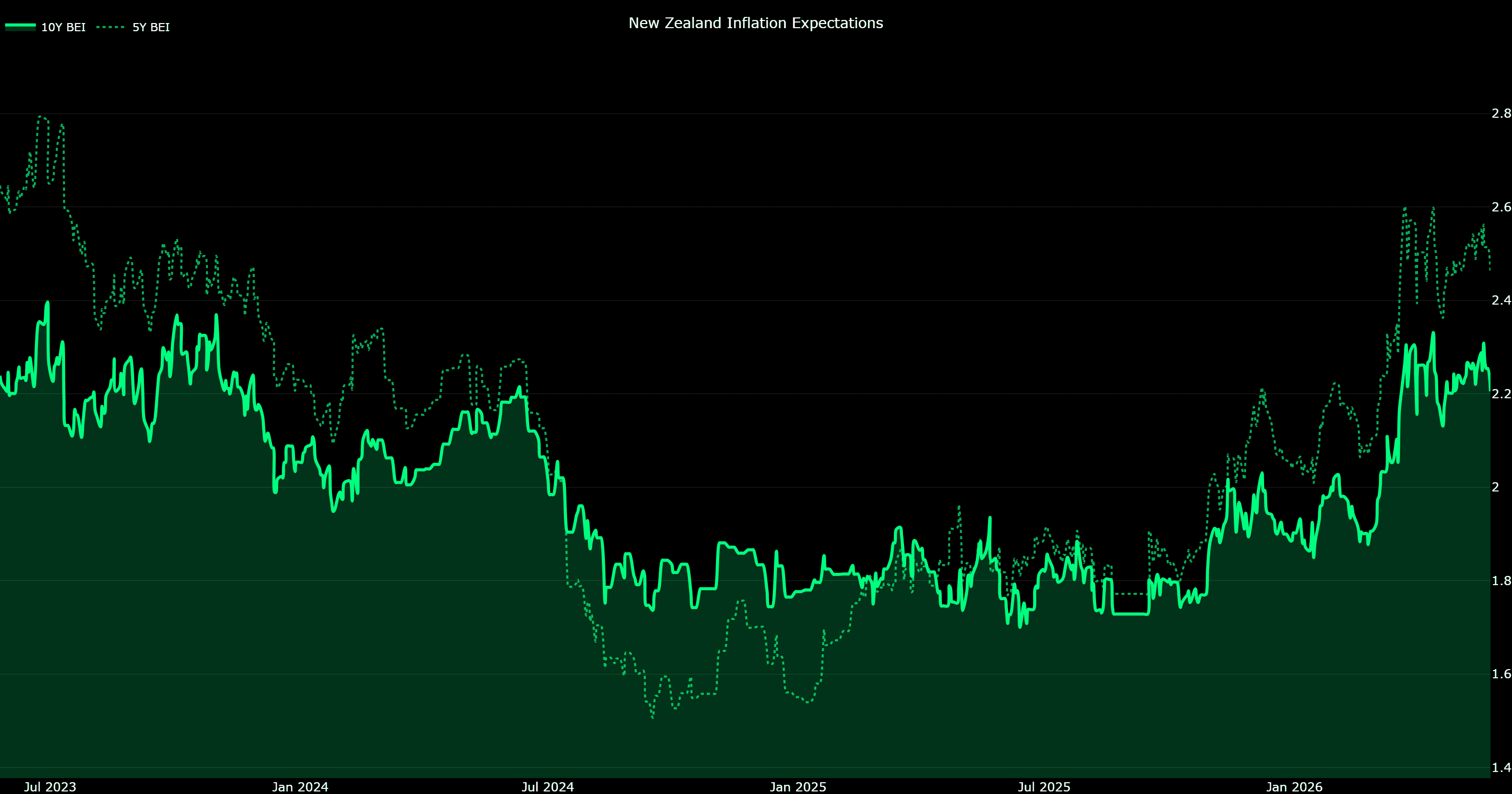
On the inflation side, the Middle East energy shock has pushed up market-based inflation expectations. Some analysts expect headline inflation to push above 4% and remain elevated throughout the year.
More problematic for the RBNZ was the recent professional respondents' 1-year inflation forecasts, which jumped from 2.6 to 3.4%.
That should matter to the RBNZ, which has stressed that it wants to keep inflation expectations anchored to 2%.
On the growth side, the picture is weaker. The latest GDP numbers were softer than expected, with forward-looking measures such as the PSI, PMI, and business confidence deteriorating.
For markets, the key issue is not whether the RBNZ holds. A hold is expected. The bigger question is whether the Bank’s updated OCR path confirms, undershoots, or exceeds the roughly three hikes already priced by rates markets.
There are four scenarios that markets will be watching.
- Dovish hold (least likely outcome based on market expectations):
If the bank decides to leave the year-end OCR projection unchanged at 2.4% will be a clear signal that the bank is not ready to tighten policy. Since markets are already pricing in 3 hikes, this could see some immediate pressure on the NZD and NZ yields.
- Hawkish hold (most likely outcome based on market expectations):
Most participants expect the RBNZ to lift their OCR projections, but the main difference among analysts is by how much. Consensus looks for a 2026 year-end rate of 2.75%, signalling two hikes.
The most hawkish shift would be the bank confirming a year-end rate of 3.0%, which would align with current market pricing for close to 3 hikes. Usually, this outcome would not be expected to see meaningful reactions in the NZD, since it’s already priced.
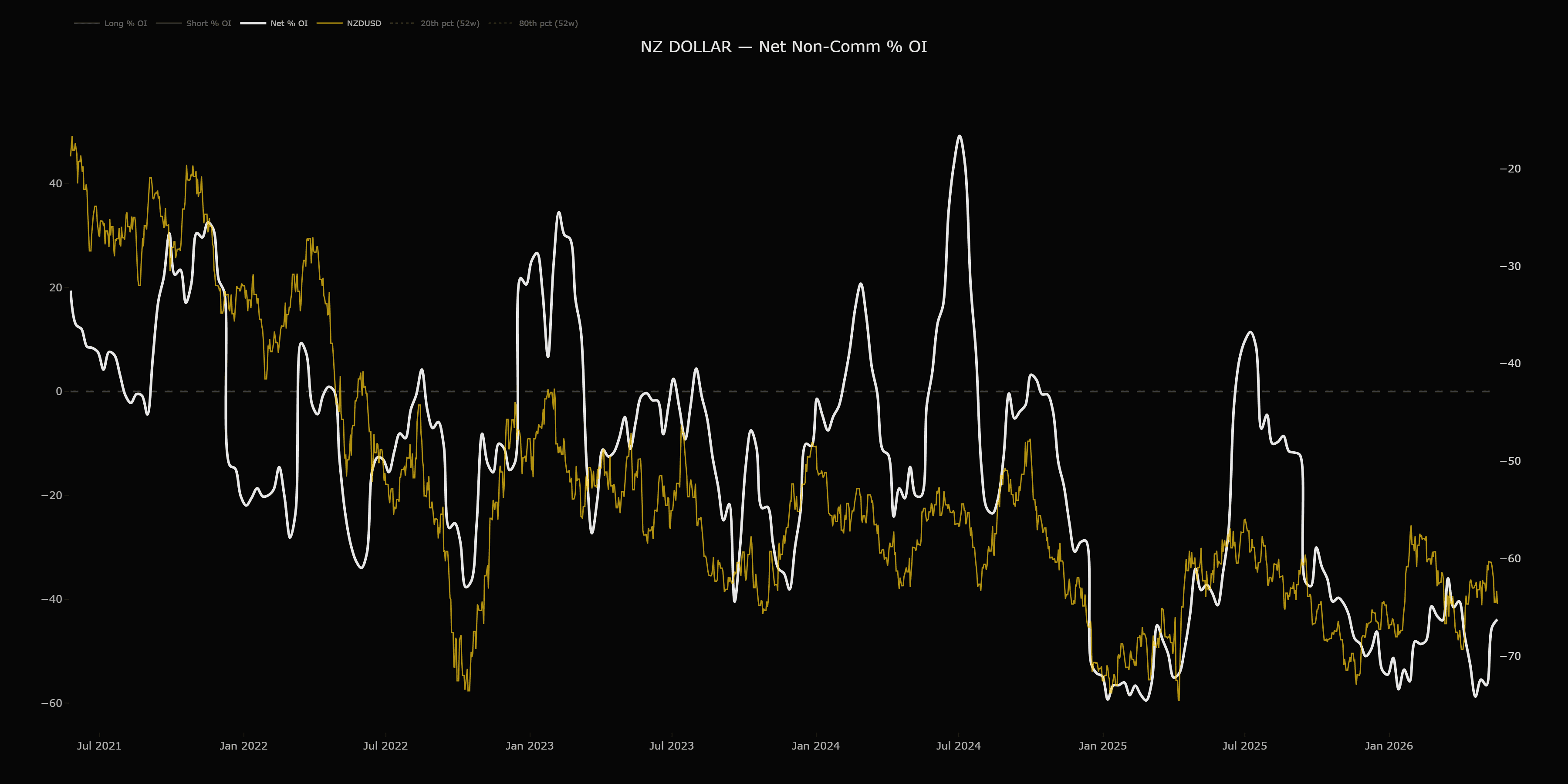
However, when we consider CFTC positioning, investors are still sitting on a sizeable net-short position in the NZD. Which means there is a risk that a confirmed OCR path of close to 3.0% could increase the appeal to increase longs.
- Surprise hike (less likely outcome but more likely than a dovish hold):
The right-tail risk for the NZD is a surprise hike. Markets currently price a close to 20% risk of a surprise hike by the bank.
Given that growth has not been as strong as the bank would like, a surprise hike feels like an unnecessary risk for businesses and consumers, where confidence is already low.
Even though it’s less likely, it is a non-trivial risk worth keeping on the radar. If they should follow through, markets would need to rapidly price in a hike, which could see immediate upside for the NZD and NZ yields.
The NZDCAD chart is an interesting one to keep on the radar.
Canada’s economic data has been deteriorating at a steady pace in recent week, with a strong divergence between the Citi Economic Surprise indexes for the two countries.
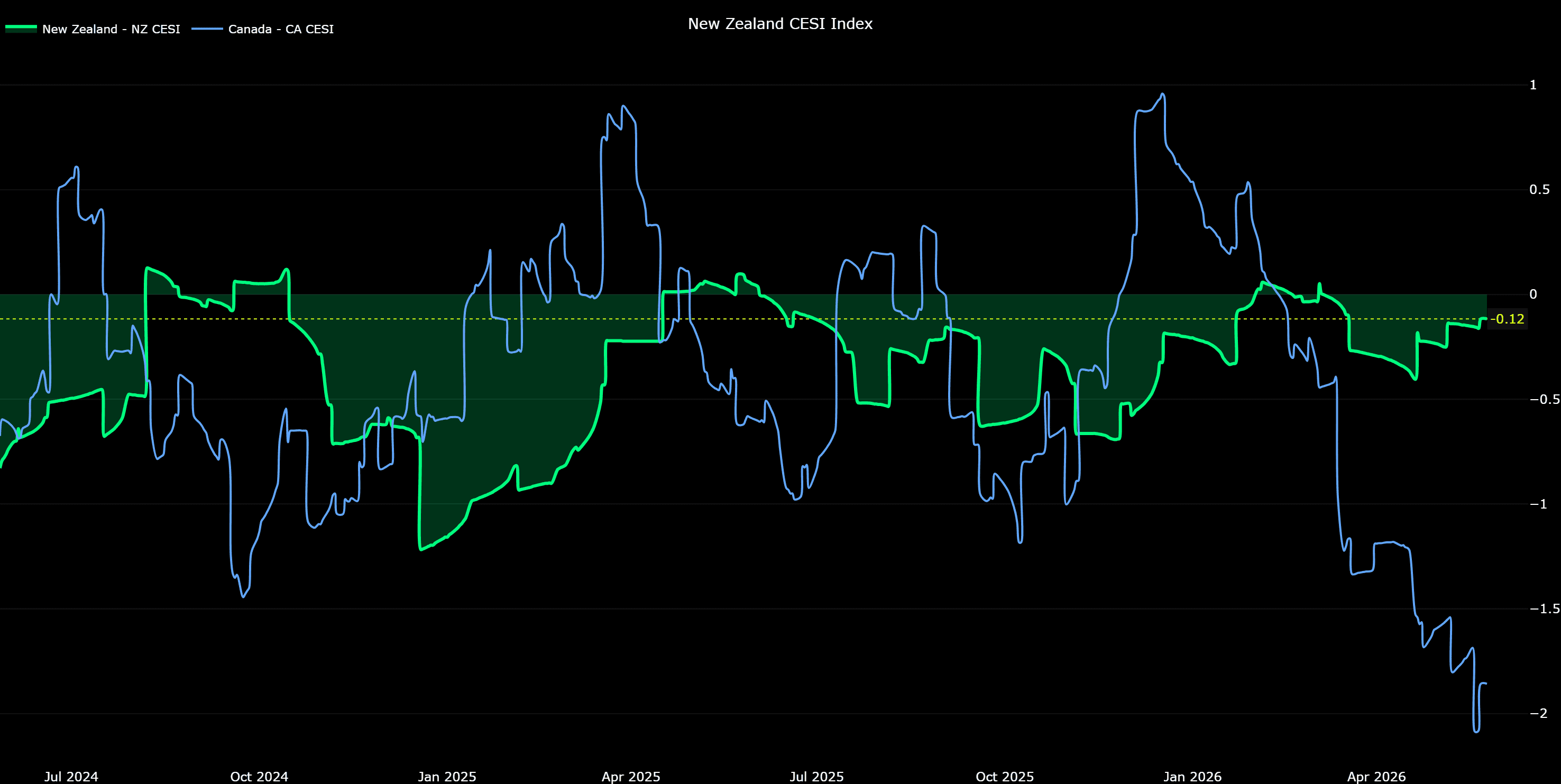
If the RBNZ can surprise on the hawkish side, it could be enough to see further rate differential attractiveness for the NZD over the CAD.
The pair is currently trading just above its 200DMA, which sits close to the 0.8050 mark.
In the event of a more hawkish-than-expected RBNZ, key overhead swing resistance at 0.8170 comes into focus and also converges with the weekly implied volatility high.
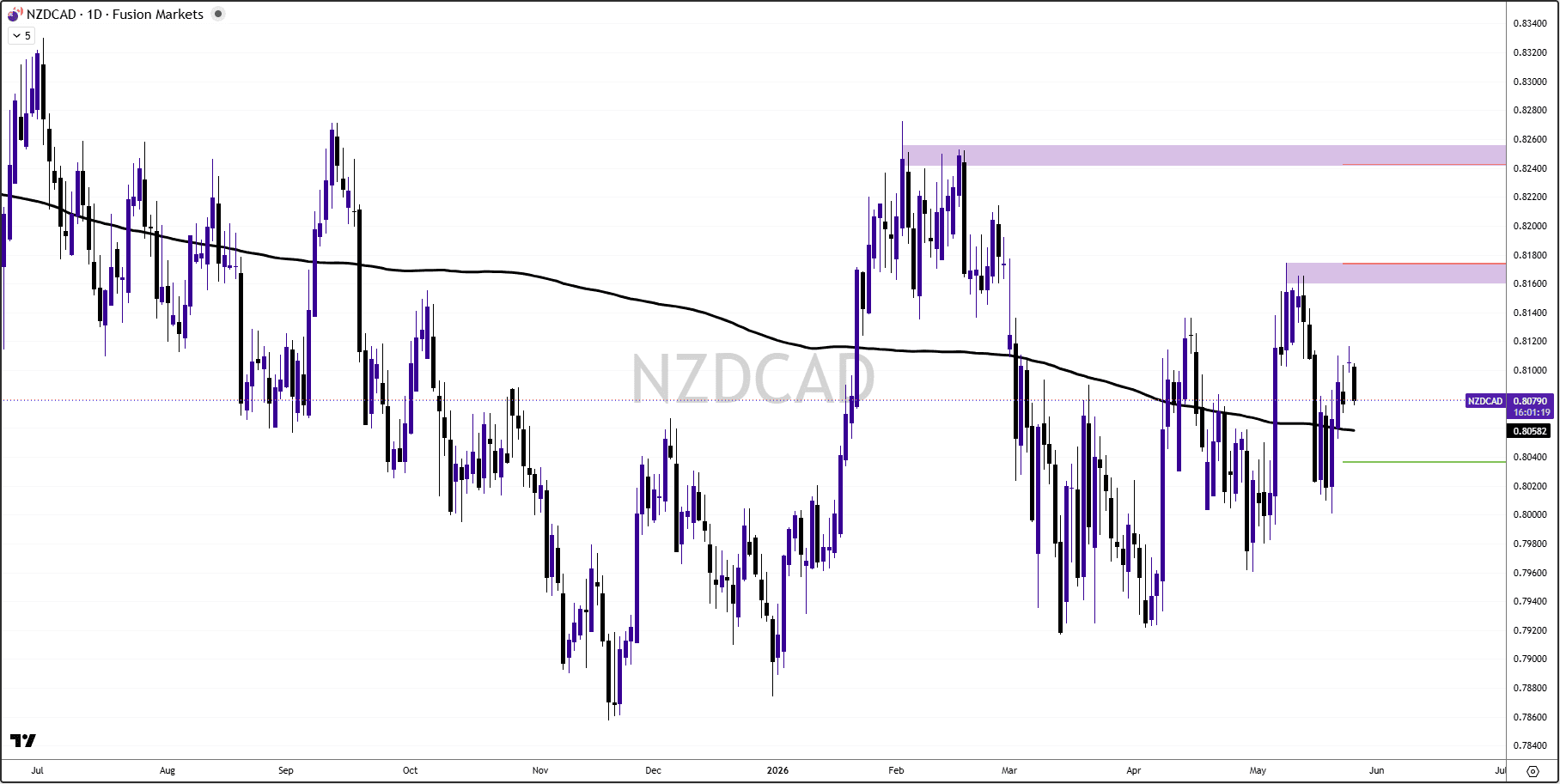
A break and close above that, brings 2026 highs into focus around the 0.8230 zone.
We’ll never share your email with third-parties. Opt-out anytime.